


How green is my expensive red wine?
Redefining luxury
Can sustainability and luxury products coexist? This was the topic of a fascinating session at the Green Wine Future conference in June 2022, a four-day online forum with more than 150 speakers who travelled from all over the world – instead of flying to Santiago, Napa or Barossa as they would have done before the pandemic.
Most of the conference sessions were aimed at people who grow, make or sell wine: adapting to the challenges of the climate crisis by reducing emissions and changing viticulture, the impact of regulations on sustainability certification, developments in eco-friendly packaging, and so on. All of these are important topics for the wine industry.
But the session that really caught our eye was the one that explored how luxury wine consumers think about all these issues.
One way to define a luxury good – for example, an extremely expensive bottle of wine that we enjoy drinking – is to contrast it with a necessary good, such as the water we need to live.
The discussion about how we can ensure that we all have enough water to survive a hotter, drier future should, of course, take precedence over the discussion of whether wealthy winemakers will still be able to produce a $1,000 Pinot Noir in a hotter, drier future. But can the latter discussion play a role in the former?
Another definition of luxury wine comes from Dr. Liz Thach, Professor of Wine and Management at Sonoma State University in California. To be considered a luxury wine, Thach says, a wine must meet several criteria: It must have been produced continuously at the highest quality level for at least 20 years. It must come from a special place. It should convey a sense of rarity. It should give the buyer a sense of privilege to own this special bottle. And it should have a premium price and fetch a higher price at auctions.
Increasingly, however, Thach says, luxury consumers are applying another criterion.
"Our research has found that consumers, especially new ones, also want a sustainable product. Was the product developed in an environmentally friendly way? And with socially just practices for employees and the community? That is actually a new aspect of what we understand by luxury wine."
One way luxury wine producers should address their environmental and social impact, Thach says, is to reduce the weight of their often outrageously heavy bottles – she pointed out that some modern luxury wine bottles can weigh up to 1.5 kg empty.
This makes sense to reduce the company's carbon footprint, as packaging and transport of the bottles can account for up to 68 percent of a winery's emissions.
"Many wineries are working to reduce the weight of their bottles," Thach said, citing one producer who reduced the weight of its bottles from 798 grams to 564 grams per bottle, thereby lowering its emission rate by 25 tons.
In addition, there are the physical effects on the people who handle the wine. "I've talked to retailers who are worried about their employees lifting a box that's too heavy," Thach said. "They know there are ergonomic and safety issues here."
"This is the elephant in the room," said Diana Verde Nieto, co-founder and co-CEO of Positive Luxury, a sustainability consulting firm in the luxury industry. "I think the social issues are huge. Not just for the people who work in the vineyard or at headquarters, but also for seasonal workers. How do we protect them and how do we ensure that the social aspects and social impact of winemaking are as positive as the ecological ones?"
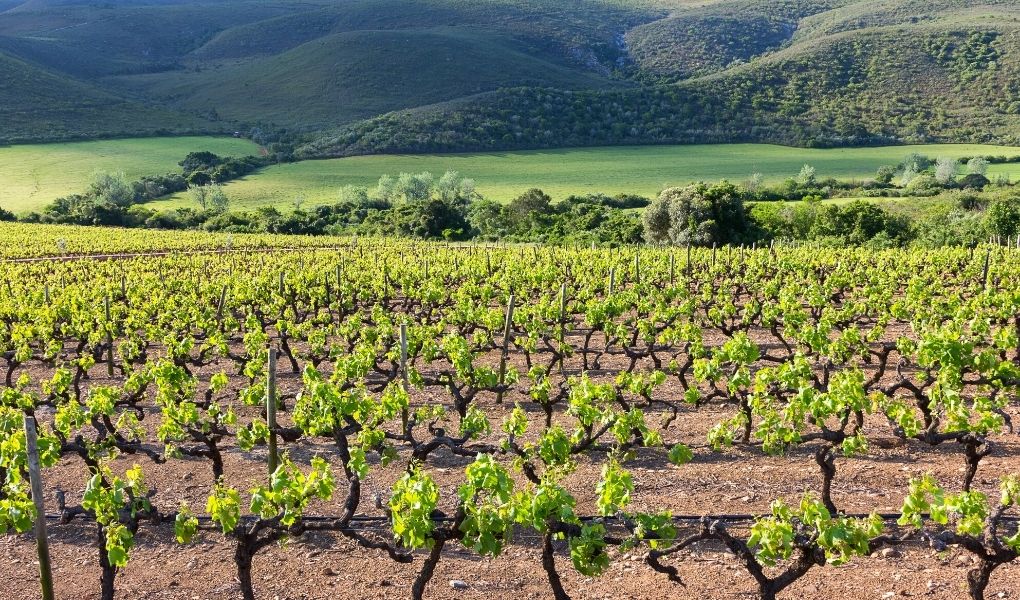
Another issue Liz Thach identified in the luxury market was that many producers of these wines were already employing impressive regenerative, organic, or biodynamic practices but were failing to communicate their efforts to consumers.
"In the past, you might have worried about being perceived as greenwashing," she said. "But that time is over. Right now, everyone is worried about our planet. And the luxury wines of the world – the leaders, the heroes – need to communicate what they're doing, because that will help set the pace and inspire others to do the same."
Julien Lecourt is director of research and development for wine magnate Bernard Magrez, who owns a number of luxury wine estates in Bordeaux, including the 250-hectare Château La Tour Carnet. Here, in 2013, Lecourt and his team found one of the most exciting answers to climate change I know. They planted 84 grape varieties – the Bordeaux classics like Cabernet Sauvignon and Merlot, as well as other Mediterranean grape varieties – to find out if they could be an option for winemaking in the future.
The team began producing wine from these grapes in their own winery with 84 micro-tanks in 2018. But they found that while they learned a lot about the individual varieties, they didn't answer the question.
"That's why this year we decided to install heating wires in the vineyard," Lecourt said. "These heat the vines by two to three degrees to simulate climate change and allow us to produce wines from grapes that have experienced the climate they will experience in 2050. Our goal is to be able to produce, by 2025, the kind of wine that will be drunk in Bordeaux in 50 or 100 years, and in a very scientific way."
This is a great story and makes me want to taste the wines from this estate. As Nicole Rolet of the southern French winery Chêne Bleu emphasizes, it's a story that appeals to my "enlightened self-interest" – an increasingly important motivation for luxury wine consumers.
"The multitude of our wishes and desires raises many contradictions in this matter," says Rolet.
"Sustainability is the ultimate luxury for those who have everything. Many people who earn a lot of money are interested in selfless things like philanthropy: if you have everything, you also want to know that what you're doing is good for others. But you still care primarily about your own needs, don't you? So you drive your Tesla because you're not destroying the planet – but you're also very comfortable."
Diana Verde Nieto believes that luxury wine companies that fail to embrace sustainability, particularly its social aspects, and appeal to enlightened self-interest, risk being outcompeted by their rivals.
"Remember Nokia?" she asked. "When we think about positive luxury [in the tech industry] today, we think of Apple. That's where we are with sustainability. It's not just about pleasing consumers, it's about staying relevant to them. If you don't want that, you can be Nokia."
Issue of "Financial Review" from 01.06.2022


