


South African Wines
Among the Winners
Hard to believe, but South Africa is moving further and further up in the rankings year after year. Thanks to KapWeine, the import of South African wines increased by a sensational 5% in 2022 compared to the previous year.
The figures are even more fantastic, considering that red wine imports saw a decrease of 10.6 million liters in 2022. Only white wine imports increased by 1%. The total import of all wines in Switzerland amounted to almost 150 million liters.
We analyze, explain, and contextualize the reasons behind South Africa's wine imports compared to other wine imports in Switzerland. Exciting figures, facts, and successful achievements.
Review 2021/2022
The remarkably low imports in 2022 are due to smaller harvests in Spain and France in 2021, which led to supply problems with packaging materials and anticipated price increases.
In South Africa, production in 2022 was also 5.5% lower. The reasons for this in South Africa were a decrease in vineyard area, weather-related disease pressure, and heatwaves in some wine regions. Furthermore, South Africa had to contend with "load-shedding," which led to widespread power outages and jeopardized harvests, vinification, and the cooling of wines.
To counteract these blackouts, many wine producers used emergency generators, which in turn led to significant expenses for their power supply. To the joy of the winemakers, the abundant grapes more than compensated for the losses. The five-year average of 1.346 million tons was exceeded in 2022. The cool vegetation and moderate weather conditions in most regions until harvest ensured uniform growth. Above all, the plants were supplied with sufficient water, which means the new vintage is characterized by particularly aromatic fruit, moderate acidity levels, and well-developed color and tannins.
The strong exchange rate of the Swiss franc meant that importers still stocked up on 158.5 million liters, which crossed the border by the end of 2021, surpassing the ten-year average of 155.1 million liters. The South African wine importer KapWeine also recorded a proud 268,904 liters in wine imports in 2022, marking an increase of 12,144 liters. This trend has continued for several consecutive years and indicates strong purchasing interest in South African wines.
Among the top 10 importers are the four largest retailers and discounters Coop, Denner, Lidl, and Aldi, which accounted for 65.5% of all imports in 2022. However, these also shrank by 1.3% compared to the previous year. In contrast, Bataillard, Rütishauser-DiVino, and Weinkellereien Aarau led to a significant increase in volume among the top 10. Other specialized retailers like KapWeine also recorded an increase in sales.
But how do wine imports differ?
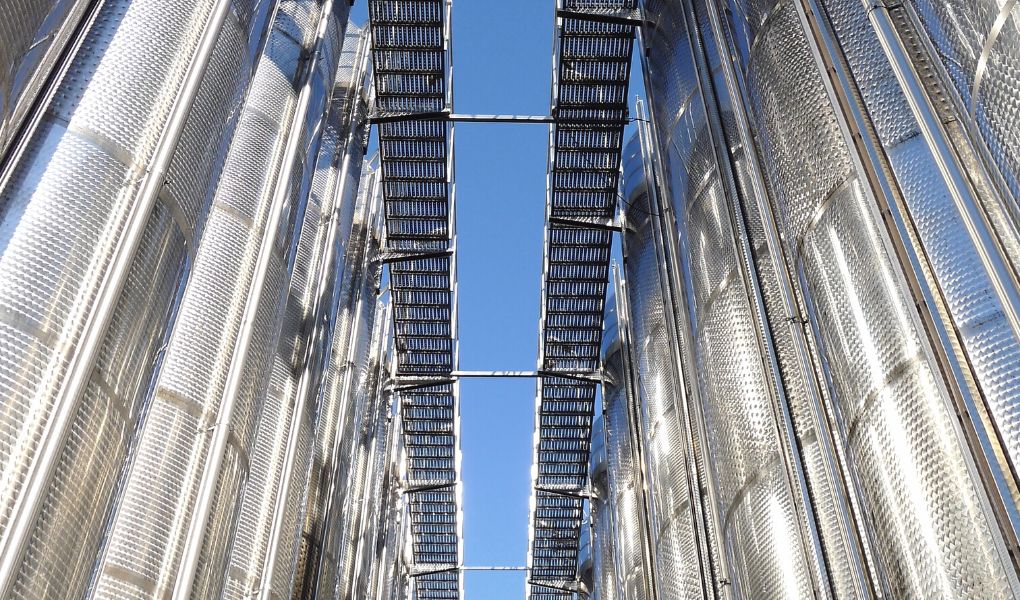
While small specialist retailers operate in a niche, targeting a small, focused customer group and managing them with smaller bottle quantities, wholesale supplies everything in large formats. A significant portion of imports consists of bulk wine, which is sold in large containers to bottling plants, traders, or processors. This also includes large tanks or tanker trucks used for commercially available wine or processing wine for the production of ready-made fondue, sparkling wine, spirits, or vermouth.
According to the Schweizerische Weinzeitung, 45.8 million liters of bulk wine were imported into Switzerland in 2022, which accounted for almost one-third of all wine exports. The average price per liter of bulk red wine was CHF 1.78 and bulk white wine was CHF 1.35, while from Spain it was 63 Rappen, from Italy CHF 1.73, from France CHF 1.90, from Germany CHF 1.63, and from the USA CHF 2.30.
In comparison: In 2022, KapWeine imported 268,904 liters of bottled wines, with an average liter price of 15 Swiss Francs. This puts the large volumes from the biggest wine importers into perspective. It is well known that bulk wine benefits from the following advantages: cheaper transport, lower customs duties, cheaper wine, no bottling costs, possibility of blending or corrections, lower CO2 emissions, and local bottling under one's own brand.
Kassensturz also reported in September 2015 that customers in the wine business can choose between the original bottling from the winery and the retailers' own brands. There is not necessarily a difference in taste, but there is a significant difference in price. Own-brand wine often arrives in Switzerland in tanks and is bottled here, allowing retailers to achieve high margins.
Why don't all importers rely on bulk wine?
Founder and CEO Andy Zimmermann of KapWeine explains:
If you look at the structure of South African wineries, you'll notice that there are no South African global brands that supply the world market (often with questionable wine qualities) with a full marketing push. Therefore, South African wine is not found in many places, at least in Switzerland. However, this has absolutely nothing to do with the quality of the wines, but rather with an honest approach to wine quality and a good price-pleasure ratio.
Another aspect is the size of the wineries in South Africa. Exact figures are not known, but if you look at the vineyard area of the 536 wineries in 2022 (in 1996 there were only 295, and in 2000 already 355), it quickly becomes clear that the majority of farms are equipped with about 30 to 100 hectares of vineyard area. Several top wineries even operate on smaller areas (5 to 20 hectares), and a few larger wine farms have a vineyard area of 100 to 200 hectares. However, these often contain more than 10 different grape varieties. With a yield of approx. 5 to 10 tons of grapes per hectare, this results in approx. 5,000 to 10,000 bottles per hectare (depending on the grape variety).
123 producers are registered as Estates. This means that these producers are only allowed to bottle grapes from their farm under the Estate label. For all wines to be exported, an export license must be issued. Samples of each wine batch intended for export are sent to the Wine & Spirit Board in Nietvoorbij, Stellenbosch, where they undergo detailed tasting tests and chemical analyses in the laboratories before licenses are granted. Each bottle is given an official seal by the Wine & Spirit Board, confirming that the information on the label regarding origin, vintage, and grape variety is true. South Africa is a global leader in ecological sustainability and regulated production integrity.
It should be noted that there is hardly a wine farm that bottles its entire production. Mostly, the poorer qualities are sold as bulk wine to the many wholesalers who bottle wine without their own vineyards and sell it under fanciful names. A lot of bulk wine is also exported in tanks and bottled in the destination country by the importer. Mostly, these are inexpensive wines of corresponding quality. However, this method is very sensible from an ecological point of view.
Compared to other New World producers (perhaps with the exception of New Zealand), South Africa most closely resembles the producer status. This means many small producers produce tiny quantities of top wines. In South Africa, bottling volumes for top wines are often between 6,000 and 12,000 bottles, often even far less. A few wine farms even produce up to 50,000 bottles of their top wines, but this is rather rare. In Bordeaux, by comparison, there are numerous producers who are capable of producing over 200,000 bottles of their top wines. South Africa still has a way to go in this regard – that takes time (and money) for new plantings, combined with patience in the vineyard. In addition, the style of wines from South Africa, which are climatically as diverse as the country itself, plays a role. Furthermore, there is a wide range of grape varieties combined with small production quantities per wine, which makes general marketing difficult.
At KapWeine, we pursue a sustainable marketing strategy. We want to work together with wineries and winemakers to make South African wines more popular and well-known. Because, as already mentioned, the quality and price-performance clearly speak for the success of South African wines. We know that it will still take some time until all wine consumers are aware of this. But other wine-producing countries also started small and today enjoy prestige. South Africa can do the same, which makes it even more important that we offer quality wine in bottles.


