


Review of 2021
The Year of Misery for Wine
Andrew Jefford looks back at a year marked by terrible weather that wreaked havoc on winemakers around the world, with no one suffering more terribly than producers in Germany's Ahr Valley..
How was the weather this year? Terrible. “La nature m’écoeure”, one of my winemaker friends posted on Facebook on April 8, after looking at the frost-damaged shoots on his vines that morning: “Nature disgusts me”. It takes a lot for a winemaker to feel that.
He wasn’t alone. Jeremiads echo across the Northern Hemisphere as 2021 draws to a close. It was the year of misery.
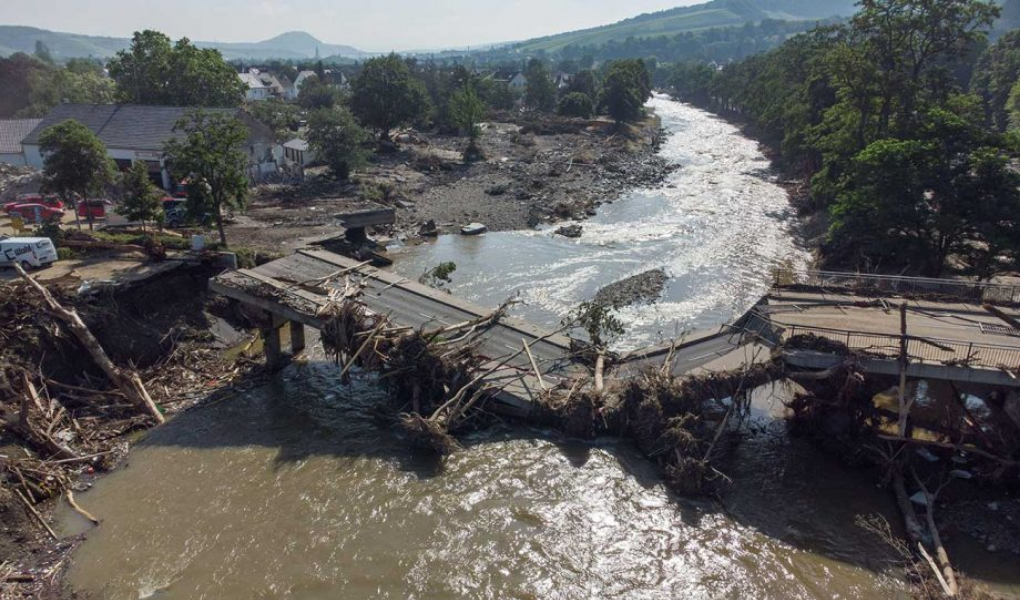
No one suffered more terribly than producers in Germany’s Ahr valley, where floods, caused by storm Bernd’s four-day standstill over East Belgium and West Germany from July 12, damaged or destroyed 65 wineries and four cooperatives, killing 133 people and destroying homes, bridges and railway lines.
The reaction from wine lovers and the German wine community has been magnificent, but a full recovery from this terrifying midnight attack by water, carried out to the sound of breaking windows, falling trees and cries for help from children stranded on rooftops, will take years.
Mid-September also saw further damaging floods in the Gard and Hérault, Southern France, affecting vineyards still holding 20% to 40% of the year’s harvest.
Economically, most of the damage in Europe was inflicted early in 2021 – due to the April frosts, which (as in 2016 and 2017) followed an early budbreak after a mild winter. This fatal pincer movement is beginning to look like the most ominous of all global warming threats to Northern Hemisphere vignerons.
As I described in my April Decanter column, vines and growers alike have done a good job of coping with record summer heat in vintages like 2018, 2019 and 2020 – but it’s the winter temperatures that are rising even more steeply than the summer temperatures. Arctic warming is disrupting the function of both the polar vortex and the jet stream, causing icy polar air to repeatedly penetrate mid-latitudes in spring.
France lost at least a quarter of its normal harvest this year – and perhaps €2bn.
Only Cognac, Savoie and Alsace were spared. A 'warm' region like Châteauneuf-du-Pape, once considered almost frost-proof, has now suffered frost two years in a row.
Then, for most regions, a rainy summer followed, with further damage from downy mildew, powdery mildew, black rot and botrytis: parts of Champagne and Burgundy lost about 30% of their vineyards to frost, then another 30% to disease. Roussillon in the southwest battled persistent drought, and the southern Rhône and Provence had to contend with both hail and wildfires.
Italy and Spain also have smaller harvests this year, though the shortfall in both is less severe than in France (9% in Italy, for example). Drought and wildfires, meanwhile, continue to pose a formidable challenge to vineyards on the Pacific coast of North America, with drifting smoke plumes and smog concerning producers from California all the way up to Okanagan.
The disorder in nature is not the only challenge for winemakers, either. I have often thought this year of the almost unimaginable problems faced by wine producers and exporters in three countries in particular: Lebanon, ravaged by one of the world’s worst economic crises in the past 150 years; Argentina, its lingering recession combined with inflation of over 40%; and South Africa, where Covid-19 led to no fewer than four complete alcohol bans between March 2020 and July 2021.
We look at wine bottles and see joy and delight, smiles and warmth – and we are grateful. When, however, the mere existence of the bottle is a triumph over extreme misfortune, even gratitude seems insufficient.
If you ever feel like drinking wine in solidarity with the struggles of growers and their workers, who work to produce the wines that bring us so much joy, then Christmas must be the time for it.


