


Aged Wines
Gold in a Bottle
Time stands still for everyone, even for wine, and often for the better. A bottle of aged wine in your cellar is not just like a gold bar, but also an opportunity to enjoy a wine that is quite different from years ago.
We live in a world where haste, fast food, fast fashion, expiring offers, and express companies prevail. And sometimes we forget that many of the good things life gives us take time. Time for them to improve and reach their best moment, and time for ourselves. That's why aged wines are not for everyone, but only for those who have reached the right age to appreciate the value of time and understand how it influences their surroundings.
It is common to attribute life to wine. One often hears the phrase "wine is a living being" as a metaphor to explain that wine evolves. In reality, biologically speaking, wine is not a living being. It is true that its existence is limited to a material whole with complex organization, in which there is molecular communication that connects it internally and with the external environment in an exchange of matter and energy in a more or less ordered or predictable manner.
This means that although it does not fulfill all the necessary functions to be considered alive, it is true that wine is born, strengthens, lives, and dies, an development that has a certain lifespan.
Thus, wine reaches its optimal maturity when its components are in complete balance and the wine shows great aromatic complexity and a long persistence, finish, or aftertaste (time during which taste and aroma linger after swallowing) both on the nose and in the mouth.
Over the years, not only does the wine in the bottle improve, but its market value also demonstrably increases. Bottles I could buy for CHF 50 10 years ago might be worth over CHF 100 today. We just have to wait and take our time, and in the meantime, drink a different wine than the one we bought for storage. So, you might already have "gold" in a bottle in your cellar and not even know it yet.
In our article Cape Fine Wine Index, you will find a detailed report on the development of wine value and why it is worth investing in wine!

CREATION
The Art of Pinot Noir – Aged – 2015
CHF 129.00

4.5 Stars by Platter’s
CONSTANTIA GLEN
FIVE – Aged – Buyer’s Risk – 2010
CHF 85.00

92 Points by Tim Atkin
CHOCOLATE BLOCK
Aged – Buyer’s Risk – 2013
CHF 59.00
EXTRAORDINARY AGING POTENTIAL OF SOUTH AFRICAN WINES
The terroir determines the extraordinary storage and aging potential. Grown on the oldest soils in the world, South African wines consistently show excellent storage potential.
Almost all South African wines can be stored well and for a long time, with most white wines offering enjoyment after 3 to 10 years, and often reaching their peak after 3 to 8 years. Unless one prefers them young, lively, fresh, and crisp, depending on the grape variety. For reds, we usually see an ideal drinking window after 8 to 15 years, with optimal drinking pleasure starting three, but preferably five to ten years after bottling. Those who prefer it rough and tough can start a bit earlier, and those who prefer velvety and tertiary flavors will wait a bit longer. And of course, it depends on the grape variety. For Cabernet Sauvignon wines, for example, I would add another three years here.
Andy Zimmermann: "I have already drunk numerous top Cabernet Sauvignon-based wines that were 20 years old and more. Many had the potential for another 10 to 20 years in the bottle. All this demonstrates the characteristic qualities of our wines. This is not limited to top wines, but applies to many good wines in the price range of CHF 20-30. Even at KapWeine, we are always surprised how small wines develop when they are open for one to three days, but of course, are returned to the refrigerator with the cork or screw cap sealed for the night. White wines develop within the first two days, quickly jumping from 80% potential when opened to 100%. Wines aged in oak barrels need one to two days longer to show their full potential. For red wines, it takes two, but usually three to five days for the wines to come together."
What is the reason for this? This is due to the terroir. That is, the climatic conditions in combination with the soil characteristics. Because South Africa is truly blessed in that regard. Of course, the so-called winemaker - we prefer to speak of a wine midwife - also contributes. Because good winemakers let the wine make itself and only accompany it. Because the wine is "made" in the vineyard. Of course, wine midwives must know, feel, and implement exactly what the vineyard, the grape, and the wine need at the right time. The use of oak barrels is then just cosmetics, but even this must be well judged and timed! Here too, optimization is key, and primarily, the wine should speak! It does this best with the accompaniment/integration of amphorae, concrete eggs, concrete tanks, and large used foudres/barrels, to tease out the best from the wine without dominating it.

92 Points by Tim Atkin
CONSTANTIA GLEN
THREE – Aged – Buyer’s Risk – 2012
CHF 54.00

91 Points by Tim Atkin
DIEMERSDAL
Private Collection – Aged – 2016
CHF 35.00

94 Points by Tim Atkin
CREATION
The Art of Chardonnay – Aged – 2014
CHF 129.00
The Best Time to Enjoy
All in all, tasting a wine during its maturation is one of the greatest pleasures the world of wine has to offer. But how do you know when the best time to enjoy or drink it has come?
1. Changes in color
White wines lose their greenish reflections and take on a more yellowish hue, which tends towards golden or even amber tones over time.
The chromatic changes that red wine undergoes are more distinct. The color of the meniscus first changes from violet to red, and then to garnet, which later becomes brownish. The red tones gradually lose color intensity, and the center of the glass (as well as the meniscus) takes on a brownish-garnet tone. With older, but also younger unfiltered red wines, harmless deposits form during the aging process, some of which can get into the glass.
2. The number of aromas you perceive
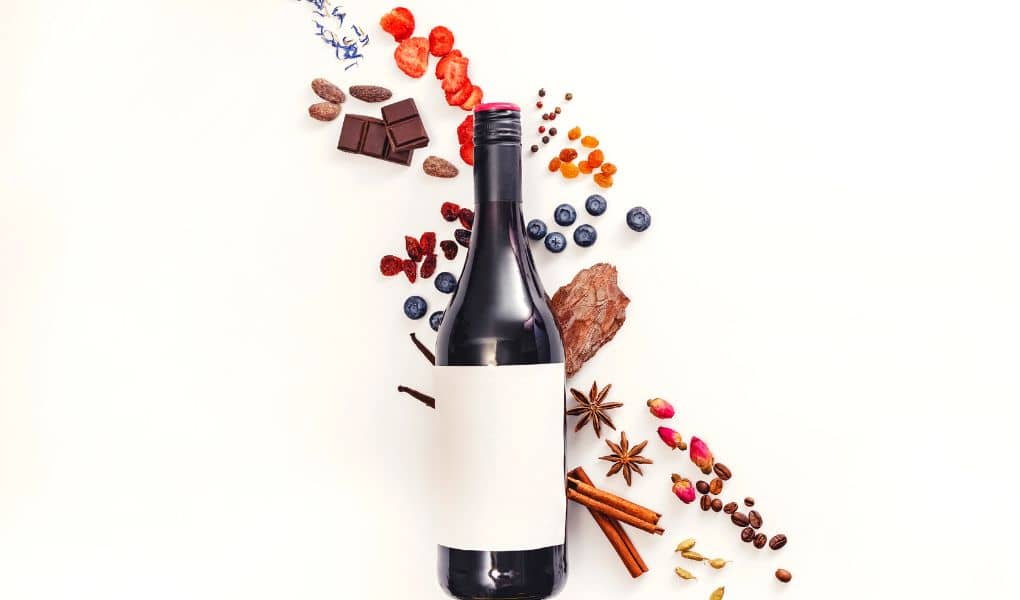
The smell of a young wine, often referred to as "aroma," is primarily fruity and is usually determined by a specific varietal.
As the wine matures, secondary aromas develop, depending on the type of winemaking process the wine has undergone. A mature quality wine achieves an aromatic complexity on the nose that is difficult to describe, with different notes emerging with each sniff.

93 Points by James Suckling
EAGLES NEST
Merlot – Screw Cap – Aged – 2015
CHF 39.00

97 Points by Tim Atkin
EBEN SADIE
Columella – Aged – 2015
CHF 239.00

92 Points by Tim Atkin
MULDERBOSCH
Faithful Hound – Top Vintage – Aged – 2015
CHF 35.00
3. It has no outstanding flavor
In its youth, an aged wine can give the impression of being an unbalanced wine, lacking equilibrium.
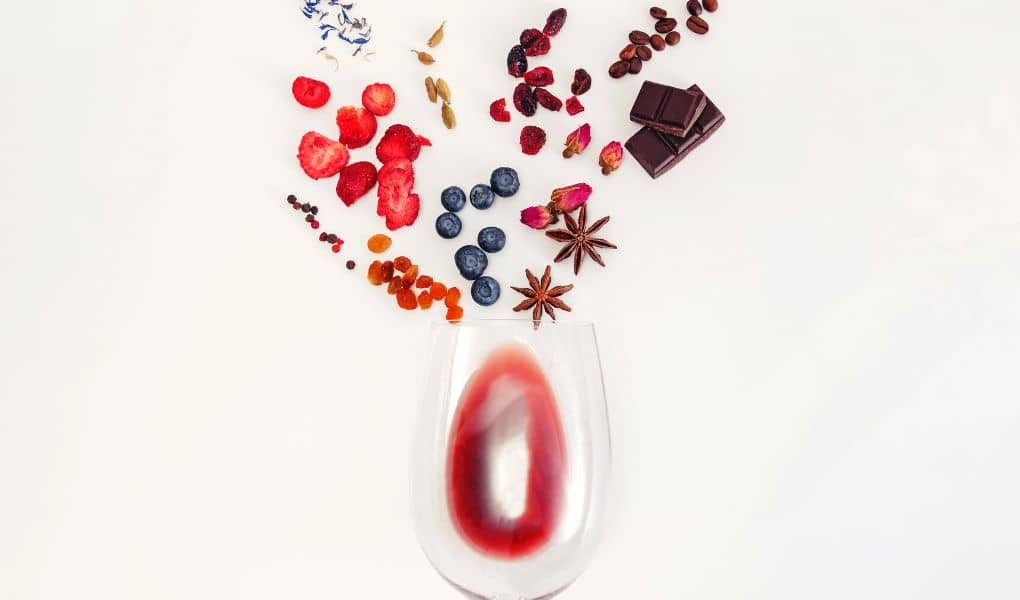
Its components (fruit, acidity, tannin, alcohol, possible oak notes), which initially seem separate, begin to refine and integrate during maturation.
During this process, the wine's aromas sometimes disappear for a certain period. Finally, all elements come together to form a whole, so that the wine eventually appears in perfect balance and harmony in the mouth, without any single flavor dominating or standing out from the others, but simply being in perfect balance.
4. The taste lingers even after drinking
This is one of the best methods to assess the maturity of a wine.
Good persistence combined with the still present tannin structure indicates a wine that can be stored well. As the wine ages, the tannins decrease and the persistence becomes shorter and shorter, the color becomes lighter and lighter, transitioning from brick red to rust red. The length of the finish and the aromas eventually disappear, and the wine oxidizes.

RAINBOW’S END
Cabernet Franc – Aged – 2016
CHF 24.00 instead of 35.00

91 Points by Robert Parker
STELLENRUST
50 – Chenin Blanc – Barrel Fermented – Aged – 2014
CHF 49.00

92 Points by Robert Parker
TOKARA
Director’s Reserve Red – Aged – Buyer’s Risk – 2008
CHF 69.00 instead of 89.00
Aged Wines on Offer
One of the most challenging aspects is assessing a wine's optimal aging period. This is where experience and personal taste come into play, which is why many wine lovers consult experts for advice on the best time to open a bottle.
Of course, it is advisable to acquire several bottles of a wine intended for aging, so that you can open a bottle from time to time to determine its current level of maturity and the optimal personal drinking window. Remember: the biggest sin is to open formerly great wines too late, namely when the drinking window has passed and the wine is fading. This must be prevented!
And here we offer you various South African aged wines from our cellar, which are often already in their prime drinking phase, but can also be stored longer.
From humble beginnings 26 years ago to today, our "aged rarities cellar" has grown slowly but steadily. In the last 5 years, there has been a truly rapid growth in wines that we have stored in appealing quantities. In the meantime, our "Degu-Lager," as we affectionately call it, has grown to over 17,000 bottles.
To appreciate the aging potential of South African wines, we recommend purchasing an aged tasting set from Warwick Trilogy or from Constantia Glen THREE or FIVE. Wines from Grangehurst / Vergelegen / Morgenster also offer good examples of current vintages that are already aged when released. For those who want even more detail, our AGED WINES and rarities offering in the online shop will provide it.
Visit our "Taste the Best" tasting and learn more!
All prices in CHF incl. VAT. Daily price as of 10.07.2023.
Offers are valid while supplies last. Errors and price changes reserved.


