


South Africa Single-Vineyard Wines
A liquid atlas
South Africa's windswept, mountainous Western Cape – on the rugged edge of a vast continent – is a place that has always been battered by the icy, stormy Atlantic. Its wines, born from its geology and the eternal onslaught of the weather, are inimitable. Originally named the Cape of Storms by Portuguese explorers in the 1480s, this exposed strip of land juts into the ocean but has long since made its peace with the extreme conditions.
Nowhere is this more evident than in single-vineyard wines. There are currently 1,731 registered single vineyards across the varietal spectrum in South Africa. However, when we talk about South African wine, the conversation begins with Chenin Blanc. This white grape variety, originally from the Loire and whose arrival in South Africa can be traced back to the 17th century, has been used for centuries as the basis for brandies and bulk wines. It remains the most widely planted grape variety in the country; it is even grown more here than anywhere else – and the wines are getting better and better.
Deep dreaming vines
A winter stillness lay over the Wellington Valley, a thin mist like a veil over the hills, green from the season's incessant rain. The vineyards, spread across the slopes, slumbered in the cold, free of their summer canopies. I had come here to find a grande dame, a Chenin Blanc planted in 1952 called Optenhorst. Is there a better time to visit and understand a vineyard than when it is at rest? The splendour and pomp of leaves and grapes are removed to reveal what lies beneath.
Wellington has a long history of viticulture and, more importantly, vine propagation. The region supplies up to 85% of the Cape's vine cuttings, known as "stokkies", which come from the Bosman Adama Nursery, a branch of Bosman Family Vineyards. The Bosman family has been growing grapes in Wellington for eight generations. The Bosman family took guardianship of Optenhorst when they bought a neighbouring farm. They did not know the riches they had acquired: Optenhorst was due to be grubbed up, it was very old and 'haasbek', which literally means 'gaping teeth', where the vines had died. Chief winemaker Corlea Fourie stopped the grubbing up and suggested to the Bosmans: "Let me give it a try."
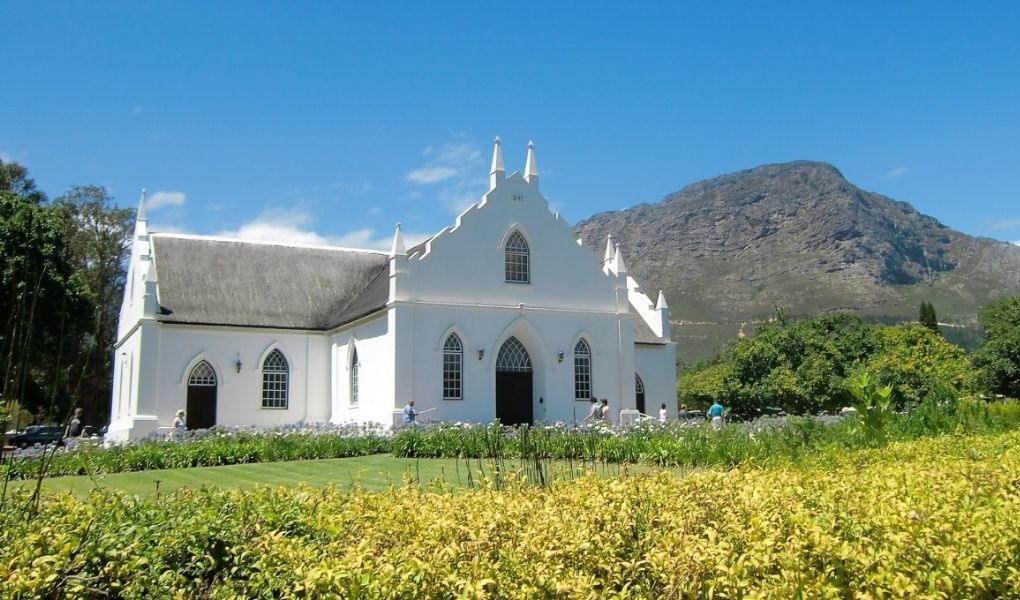
The name Optenhorst means "sitting on a hill", as the bushvine vineyard stretches over a hill overlooking the valley and the town's historic white church in the distance. I walked with winemaker Natasha Williams to a stone monument in the middle of the site. Williams, who has now taken over the production of this wine from Fourie, uncorked a bottle of the 2019 vintage. The scent of honeyed fruit and oranges mingled with the electric smell of the rain-soaked earth around us. "When Optenhorst is in the cellar, you know she's a lady who makes her presence felt," Natasha says. "You feel that this vineyard is exactly where it belongs, it has that distinctive honeyed scent that we don't find anywhere else."
Single expression
Mick and Jeanine Craven have been making Craven Wines since 2013 – always from single vineyards and single varieties. Their winemaking is equally transparent, with as little intervention as possible. The wines respond to this "hands-off" approach by delivering a resonant purity of fruit. The Cravens work exclusively in Stellenbosch, particularly in the Polkadraai Hills, seeking out special sites on the fringes of the better-known areas. Although they do not own their own vineyards, they work closely with grape growers. "The farmers themselves are an important part of the terroir," Mick says when I meet him for a walk in Karibib, a farm from which he sources his eponymous Chenin.
Our boots sink into the mud as we climb the steep slope, rising from 60m to 400m above sea level. Half trellised, half bush, it's an oddly shaped vineyard. "It's a radial bushvine," Mick says. "The vineyard used to be farmed for sweet wine production, and the farmer was happy that we wanted to make dry wine from it. With a little attention, we had a very special block on our hands."
The smuggler's reward
The variety was not yet approved for cultivation by the wine authorities, a process that could take up to ten years at the time. But de Wet didn't want to wait. "My friend and Stellenbosch winemaker Jan Boland Coetzee was working for Joseph Drouhin in Burgundy in the early 1980s. I asked him to get me cuttings from Drouhin's Clos des Mouches vineyard in Beaune, which he did."
These cuttings travelled across the oceans in chocolate boxes, children's nappies and in the lining of jackets. Various other producers also smuggled material, some with more success than others (there were some fraudulent Auxerrois). In 1987, de Wet planted one of the first Chardonnay vineyards at De Wetshof, from which the estate's flagship wine, the Bateleur, is made. "I love to see the enthusiasm and commitment of the younger generation of Chardonnay producers," says de Wet. "They understand more than my generation the importance of location and sense of place."
Up the river
Alheit Wines for every taste

Sale
ALHEIT
Cartology – 2020
CHF 34.90 instead of CHF 44.00

Sale
ALHEIT
Broom Ridge – Chenin Blanc – 2019
CHF 59.00 instead of CHF 65.00

Sale
ALHEIT
Hemelrand Vine Garden – 2019
CHF 32.90 instead of CHF 39.00

Sale – last vintage
ALHEIT
Fire by Night – Chenin Blanc – 2018
CHF 69.00 instead of CHF 79.00

Report by Falstaff, May 13, 2022
All prices in CHF incl. VAT. Daily price from 24.05.2022.
Offers valid while stocks last. Errors and price changes reserved.


